


Press Statement
29 August 2026
Amnesty International Malaysia strongly condemns the government’s decision to begin implementing its agreement with the Myanmar authorities to return 5,000 Myanmar refugees, starting with the return of 1,476 people (mostly Rohingya) on 29 September 2026. This move by the Madani government comes at a time when conflict, displacement, and serious human rights violations continue across the country.
Just days after the ninth anniversary since the atrocities committed against the Rohingya began on 25 August 2017, Malaysia is preparing to send Rohingya refugees back to a country where they would be at severe risk.
“Malaysia must immediately halt all planned returns to Myanmar that could expose people to persecution, serious human rights violations or other irreparable harm. The situation in Myanmar remains fundamentally unsafe, and no assurance by both Myanmar and Malaysia authorities can change that reality,” said the spokesperson for Amnesty International Malaysia, Divya Shesshsan Balakrishnan.
Myanmar Remains Unsafe
The government has repeatedly described these returns as voluntary and safe, even as the continuing human rights crisis continues to pose grave threats to the lives and safety of Myanmar people.
Ongoing documentation by Amnesty International, as well as recent assessments by the Office of the United Nations High Commissioner for Human Rights, shows that conditions for safe, dignified, sustainable and voluntary returns of Rohingya refugees do not currently exist in Rakhine State. The UN High Commissioner for Human Rights has called on governments to protect people fleeing the conflict in Myanmar through international protection pathways.
On 25 August 2026, the UN human rights office said that the situation in Myanmar has fallen to a new low, singling out the “ever-worsening brutal abuse” of the Rohingya minority population in Rakhine state.
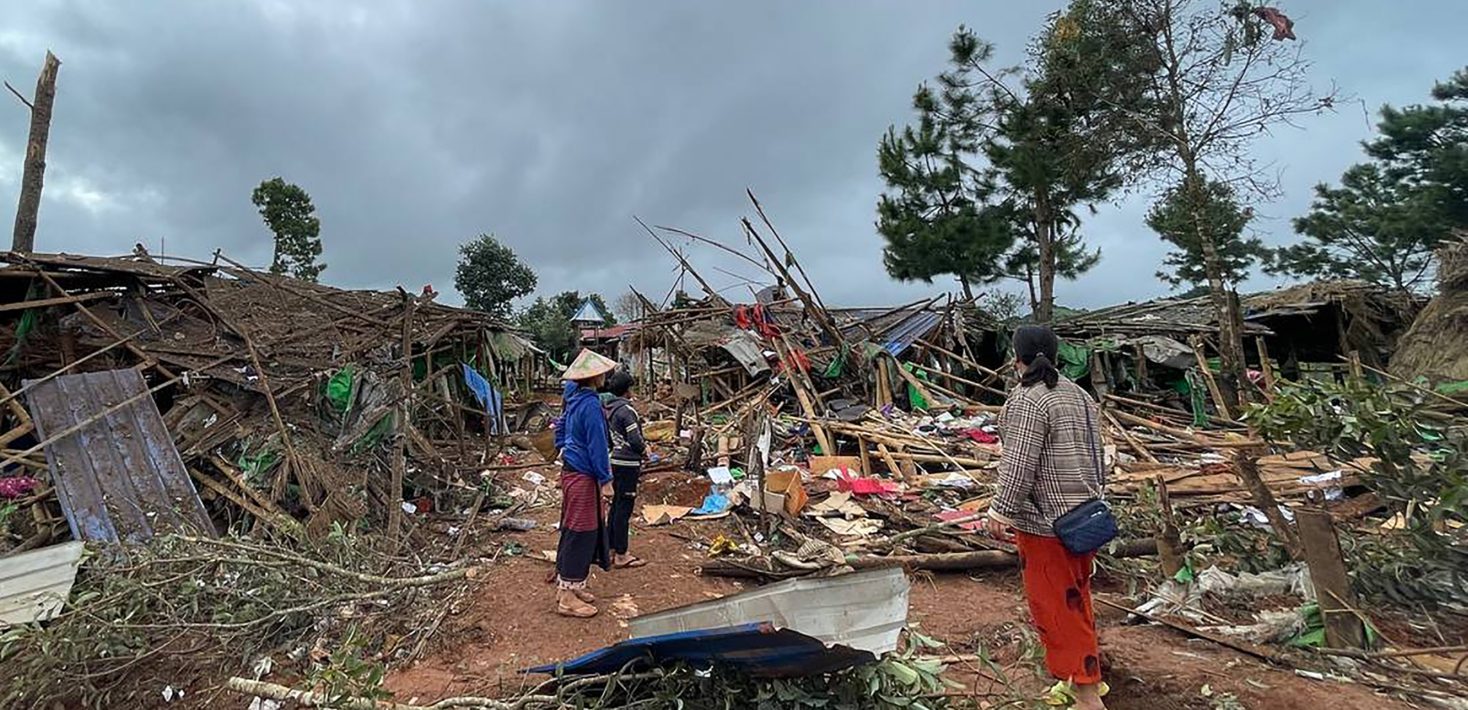
The fact that people continue to flee armed conflict, economic deprivation, military conscription and relentless air strikes against civilians in Myanmar should itself be a warning against any plans for return.
“The principle of non-refoulement is non-negotiable. Malaysia cannot, in good conscience, ignore the conflict, persecution, and grave risks people will face after being returned to Myanmar,” said Divya Shesshsan Balakrishnan.
Malaysia’s Actions Contradict Its Myanmar Policy
For years, Malaysia has been among ASEAN’s most vocal advocates for accountability, humanitarian action and solutions to the crisis in Myanmar. Malaysia has repeatedly called for an end to violence, the implementation of the Five-Point Consensus and an inclusive political dialogue.
Such positioning, however, cannot be reconciled with plans to return Myanmar refugees in partnership with the Myanmar authorities, while the very conditions driving displacement remain unresolved.
“Malaysia cannot simultaneously argue that Myanmar remains in crisis while preparing to return refugees. It has spent years speaking out about the human rights situation in Myanmar, but the credibility of that position is now being betrayed by its own actions,” said Divya Shesshsan Balakrishnan.
What Is The Real Purpose Of Malaysia’s Refugee System?
The announcement also raises serious concerns about the direction of Malaysia’s refugee policy.
For months, the government has repeatedly spoken about protection, humanitarian values, and the development of a national refugee framework. Yet one of the first major outcomes emerging from that process appears to be the return of 1,476 refugees to a country still facing widespread conflict and human rights violations.
“The lack of transparency surrounding the Refugee Registration Document (DPP) raises serious concerns about how power is being exercised over the lives of refugees and asylum-seekers in Malaysia. When decisions affecting protection, detention and possible returns are made without adequate oversight, transparency or accountability, the risk of harm increases significantly.”
A Test of Malaysia’s Values
As Malaysia prepares to celebrate its 69th year of independence, Amnesty International Malaysia urges the government to hit pause and reflect on the values it wishes to uphold.
Malaysia has long prided itself on its compassion, humanity, and solidarity with those facing conflict and persecution.
Malaysia should use its influence in the region to address the root causes of displacement and support refugee protection, and not advance returns to conditions that remain unsafe.
“The world is watching closely. How this group 5000 refugees are treated will not only shape the future of refugee protection in Malaysia; it will determine whether Malaysia is viewed as a country that protects refugees or one that turned its back on people in need of safety,” said Divya Shesshsan Balakrishnan.
Amnesty International Malaysia calls on the government to:
- Immediately halt all planned returns to Myanmar that would expose refugees and asylum-seekers to persecution, serious human rights violations, or other irreparable harm, and fully uphold the principle of non-refoulement;
- Establish independent oversight, greater parliamentary scrutiny, and transparent accountability mechanisms for the DPP and Malaysia’s broader refugee management framework;
- Shift the focus of Malaysia’s refugee policy away from returns towards protection, rights-based solutions and meaningful access to healthcare, education, livelihoods and other essential services;
- Use Malaysia’s influence within ASEAN to advance protection, accountability, and durable solutions for people displaced by the crisis in Myanmar, and to oppose any premature returns until conditions for safe, voluntary, dignified and sustainable return fully exist; and
- Commit to long-term legal reform by ratifying the 1951 Refugee Convention and its 1967 Protocol, and bringing Malaysia’s refugee policies in line with international human rights standards.
For more information, contact [email protected]