


Press Release
21 April 2026
The global human rights system is under unprecedented strain, with the situation in Malaysia also backsliding, Amnesty International Malaysia said today, on the launch of its annual State of the World’s Human Rights report. In 2025, the world witnessed a broad and dangerous trend: the gradual disintegration of rules, institutions, and norms designed to protect human dignity.
Amnesty International’s State of the World’s Human Rights report documents this alarming trajectory across 144 countries. It paints a stark picture of a world where human rights protections are no longer simply neglected but actively dismantled.
As the world stands on the brink of a perilous new era driven by powerful states, corporations and anti-rights movements, Malaysia faces a defining choice: reverse course and fulfil its human rights commitments or continue down a path of managed repression and shrinking civic space.
Malaysia: Between Reform and Repression
Malaysia has not been immune to global trends. While some developments in 2025 signaled progress, these were inconsistent and overshadowed by regression in key areas, particularly freedom of expression and peaceful assembly.
“Malaysia is at a critical crossroads. It can either demonstrate leadership by upholding human rights at home, or risk aligning itself with the very global trends of repression it claims to oppose” said Amnesty International Malaysia’s spokesperson, Divya Shesshsan Balakrishnan.
The Malaysian government has not only failed to repeal draconian laws restricting freedom of expression but has instead continued to weaponize them and expand their reach into digital spaces.
The dismissal of the Mentega Terbang filmmakers’ challenge against Section 298 of the Penal Code upheld vague and overbroad powers to criminalize speech deemed offensive to religious sensitivities, undermining artistic and critical expression and falling short of human rights standards.
While the Court of Appeal ruled in favour of activist Heidy Quah, striking down the terms “offensive” and “annoy” in Section 233 of the Communications and Multimedia Act (CMA), this was short-lived. In February 2026, the Federal Court reinstated these terms and by doing so, reaffirmed the state’s ability to criminalize a wide range of online expression.
“From filmmakers being dragged through the courts to vague terms like ‘offensive’ and ‘annoy’ being reinstated as punishable offences, we are seeing repressive laws being reinforced, not reformed. These decisions hand authorities sweeping powers to arbitrarily criminalize almost any form of expression,” said Divya Shesshsan Balakrishnan.
At the same time, arrests under the Sedition Act, the CMA and the Penal Code persisted, reinforcing a climate of fear and self-censorship. LGBTI individuals were also increasingly targeted through censorship, raids and harassment that further shrink Malaysia’s already constrained civic space.
Criminalizing Protest at Home While Championing Rights Abroad
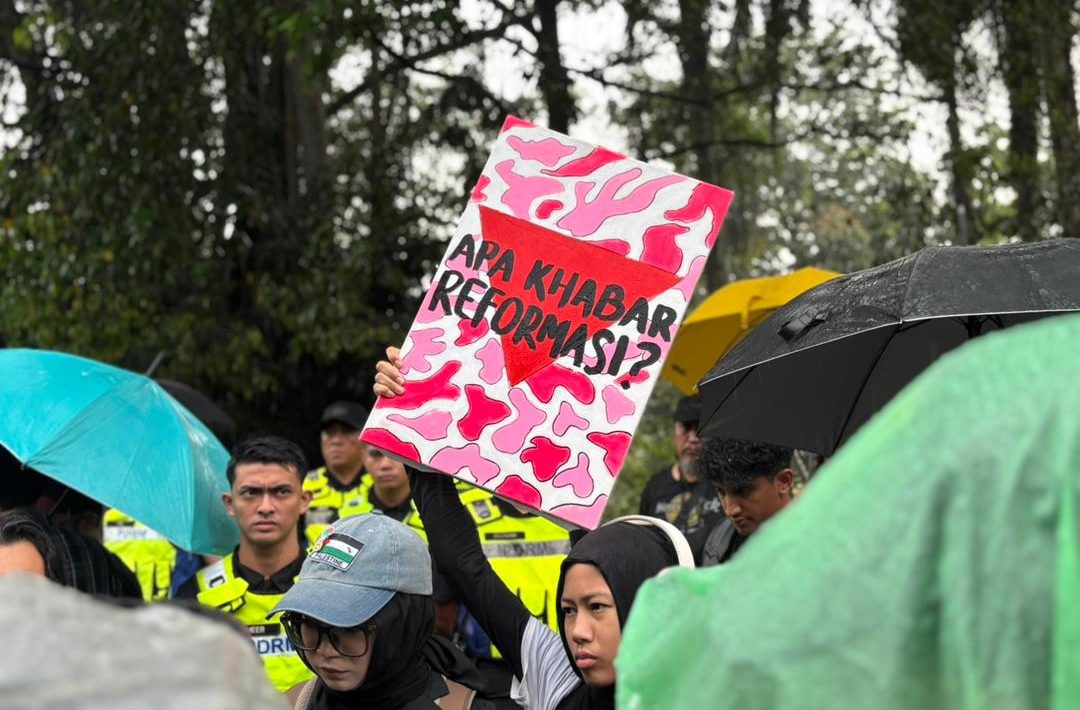
The right to peaceful assembly continued to be undermined through the use of the Peaceful Assembly Act (PAA) and other laws to investigate and intimidate protesters despite constitutional protections and repeated government commitments to reform these laws.
Although a Federal Court ruling declaring Section 9(5) of the PAA unconstitutional offered hope, it has yet to translate into meaningful reform. More than a year on, there has been no substantive overhaul of the law. Instead, authorities have continued to rely on its repressive provisions, alongside the Penal Code and Minor Offences Act, to investigate and intimidate protesters.
“Announcements of reform alone are not enough, as people are still being arrested, investigated, and intimidated for speaking out. The government must urgently amend the Peaceful Assembly Act as it has promised, ensuring it is in line with international human rights law,” said Divya Shesshsan Balakrishnan.
The contradiction is most evident in the government’s response to protests on international issues. While Malaysia publicly condemned global human rights abuses, individuals raising the same concerns at home have faced arrest and investigation.
In October, peaceful demonstrators protested Israel’s interception of the Global Sumud Flotilla, a move the government itself had criticized. Yet authorities responded with arrests and force, with at least one individual later charged.
“There is a stark contrast between what Malaysia says on the global stage and what it does domestically. Credibility on human rights is demonstrated by action not words, and must be reflected in law, policy, and practice, said Divya Shesshsan Balakrishnan.”
The government’s crackdown has also increasingly affected young people in Malaysia. In Sabah, at least seven student activists were investigated and charged over anti-corruption protests in May. Earlier this month, three anti-corruption activists were arrested in yet another disproportionate response to peaceful dissent.
Refugees, Policing and the Erosion of Rights
At a time of escalating global conflict and displacement, Malaysia’s approach to refugees and migrants marked by pushbacks, arbitrary detention, and a lack of transparency in immigration processes raise serious human rights concerns.
In 2025, Rohingya refugees fleeing violence and persecution in Myanmar were detained, and their boats pushed out of Malaysian waters. Immigration raids against refugees and undocumented migrants intensified throughout the year. As of August, more than 20,000 individuals, including over 2,000 children, were detained in facilities across Malaysia.
“At a time when people are fleeing conflict and crisis situations, Malaysia must uphold its responsibility to provide protection—not push people back into harm’s way or detain them indefinitely without due process,” said Divya Shesshsan Balakrishnan.
Concerns were further heightened by reports of cross-border abuses, including the case of activist Thuzar Maung, believed to have been abducted with her family in Malaysia and returned to Myanmar.
While the government has announced plans to introduce a national refugee registration process in 2026, there has been little transparency on how it will protect asylum seekers or address existing detention practices.
These accountability gaps extend beyond immigration enforcement. The High Court’s ruling that the government and police were responsible for the enforced disappearances of Pastor Raymond Koh and Amri Che Mat marked a significant development, but accountability remains incomplete.
Other incidents, including fatal police shootings and deaths in custody, continue to raise serious concerns about insufficient oversight and impunity.
Even where progress was made, with the reduction in the number of people on death row, momentum has faltered. With courts still handing down death sentences, including for drug-related offences, the government’s proposed study that was announced last year must translate into a clear path toward full abolition.
A Call for Meaningful Reform
At a time when global human rights standards are under sustained attack, Malaysia has an opportunity to lead, not by rhetoric, but through action.
“Amnesty International Malaysia urges the government to move beyond rhetoric and ensure human rights are meaningfully reflected in its policies and actions. This requires ending the crackdown on freedom of expression and peaceful assembly, delivering meaningful legal reforms, abolishing the death penalty in full and addressing systemic abuses in detention and law enforcement,” said Divya Shesshsan Balakrishnan.
“Human rights cannot be selective, and they cannot be postponed. The government must reverse backsliding and demonstrate a clear, consistent commitment to reform.”
For more information or to schedule an interview with a spokesperson, please contact Amnesty International Malaysia’s Communications Officer, Divya Shesshsan Balakrishnan at [email protected]